

Thank you for Subscribing to Gov Business Review Weekly Brief

City of Chattanooga
Melissa Taylor, Director of Transportation Planning/MPO Coordinator Regional Planning
An Introspective on the Importance of Regionalism and Career Public Service in Transportation
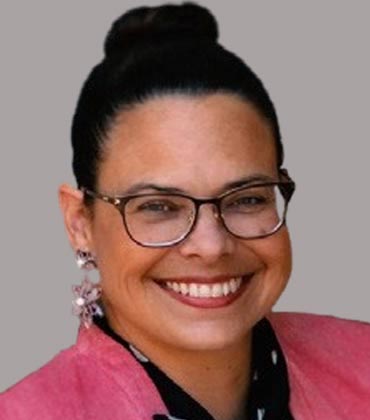
Melissa Taylor
By Oxford's definition, regionalism is “the theory or practice of regional rather than central systems of administration or economic, cultural, or political affiliation”. People traveling within a region are not concerned with political boundaries; however, those facilities must be coordinated and connected among the cities, counties, and even states they traverse. Geography of Transport Systems, written by Dr. Jean-Paul Rodrigue and Dr. Theo Notteboom, details the links between economic success and the necessity of integrated transportation networks. They cite “the highly transactional and service-oriented functions of many transport activities underline the complex relationship between its physical and human capital needs. For instance, effective logistics rely on infrastructures and managerial expertise.”
 Local transportation officials are responsible for serving local communities with an adequate and well-maintained transportation system. As a critical function of any city or county, transportation issues usually get people wondering: why don’t roads get fixed, and why do projects take so long? Well, there are plenty of reasons, but here are mine. Professionals in transportation, whether it be planning, programming, logistics, engineering, or construction, are in a niche. Finding experienced individuals for the pay can be challenging in the public sector since many local governments have “flat” budgets. Those budgets don’t generate substantial pay increases or fund large capital projects, so state and/ or Federal funding is reliant, and those funds come with a rigorous and nuanced process. And, though the latter extends a project timeline, based on my experience, it isn’t one of the most significant reasons projects take so long; I believe the most important issue is missed opportunities to leverage a regional approach, which provides added resources and the loss of institutional knowledge resulting from employee turnover. Recruitment in public service can be difficult, but especially in transportation. Lacking institutional knowledge may be the most glaring reason that awarded Federal funding often goes unused and inevitably returned.
 Figure 1 depicts the Federal funding made available for competitive discretionary programs and those calculated by formula for transportation projects across all 50 states. Regional Metropolitan Planning Organizations (MPOs) are federally mandated and receive funds through formula allocations. As such, they are more equipped to run federally supported programs and projects than local governments. They employ staff with a variety of expertise to produce robust transportation plans and traffic studies covering multiple jurisdictions, and they retain consultants for workload demands.
 Overly complex regulations can cause project delays, and it is common knowledge that federally funded transportation projects, on average, take 10-20 years to complete. It is difficult to know precisely how damaging wasted time and money from these delays are to a single local economy, but clearly, they aren’t helping their success. Reflecting on my over 25-year career in one local government, I see “career public service” as an undervalued aspect of the solution to improve the delivery of transportation programs and projects. Career public service provides consistency, builds functional networks at all levels of government, serves as an administrative resource because the people in those jobs “know the ropes”, offers personal rewards other than pay, and grows institutional knowledge within the organization for which there is no easy training or educational equivalent. Loss of institutional knowledge is the most likely cause of poor transportation project management and stalled implementation compared to a burdening bureaucratic process. I know first-hand that bureaucracy and regulatory compliance may be streamlined by leaders with sufficient institutional knowledge and effective time management. I also know that an eager-to-learn planning team and adequate tools, technology, and resources can create award-winning work.
Loss of institutional knowledge is the most likely cause of poor transportation project management and stalled implementation, more so than bureaucratic burdens.
 From left to right : Ashby Johnson-AMPO Board President, Keli Kemp-MMP, Melissa Taylor-CHCNGA MPO, Julia Billings-MMP, and Bill Keyrouse-AMPO Executive Director
Being fortunate enough to remain in the same planning department for an entire career, I can reflect on my experiences to demonstrate the importance of a career in public service. As a young planner, I was able to contribute new perspectives on lacking mobility options from my non-traditional planning education of a Master’s Degree in Environmental Science. These contributions to the region’s 2002 bike plan won the TN Chapter of the American Planning Association’s (APA) award for Outstanding Plan Implementation (Figure 2 Award Video). Through eight years of service as a transportation planner, I was able to maintain progress towards the MPO’s vision to create an effective multimodal system and build trust with the Executive Board of local governments and the public. A multimodal system has been developed and continues to evolve. Three of five major plans and programs have won state and/or national recognition in transportation planning during my time as Director. Figure 3 represents the innovative project selection process that the Chattanooga-Hamilton County/North Georgia MPO has continued to advance since 2014; this framework played a critical role in achieving a multimodal network by changing how projects were prioritized and selected for Federal funding.
From left to right : Ashby Johnson-AMPO Board President, Keli Kemp-MMP, Melissa Taylor-CHCNGA MPO, Julia Billings-MMP, and Bill Keyrouse-AMPO Executive Director
Being fortunate enough to remain in the same planning department for an entire career, I can reflect on my experiences to demonstrate the importance of a career in public service. As a young planner, I was able to contribute new perspectives on lacking mobility options from my non-traditional planning education of a Master’s Degree in Environmental Science. These contributions to the region’s 2002 bike plan won the TN Chapter of the American Planning Association’s (APA) award for Outstanding Plan Implementation (Figure 2 Award Video). Through eight years of service as a transportation planner, I was able to maintain progress towards the MPO’s vision to create an effective multimodal system and build trust with the Executive Board of local governments and the public. A multimodal system has been developed and continues to evolve. Three of five major plans and programs have won state and/or national recognition in transportation planning during my time as Director. Figure 3 represents the innovative project selection process that the Chattanooga-Hamilton County/North Georgia MPO has continued to advance since 2014; this framework played a critical role in achieving a multimodal network by changing how projects were prioritized and selected for Federal funding.
 Between 2012 and 2018, the MPO staff created and managed a two-time award-winning travel demand management program, GreenTrips. In 2024, with consultant support from Modern Mobility Partners, LLC., the MPO’s 2050 Regional Transportation Plan won three prestigious awards: Outstanding Achievement for a Transportation Management Area (TMA) from the National Association of Metropolitan Planning Organizations (Figure 4), Outstanding Plan from the GA Chapter of the American Planning Association (APA), and an honorary award from the Georgia American Council of Engineering Companies.
Aside from passion in the field, I attribute these successes to institutional knowledge. In the words of Albert Einstein, “The only source of knowledge is experience”, and those experiences enabled me to hone skills and learn what works in the community where I live and for the community I serve. Local governments may not recognize the monetary savings and economic gains of employee retention. It may be more financially feasible to support a Federally funded regional entity, like an MPO, along with several other local governments to avoid redundancies and leverage its benefits of collaboration and data collection analysis at a lower cost while internally placing focus on key positions in transportation engineering and construction with higher wages to emphasize longevity and career public service. These actions can create positive and synergistic outcomes that will persist well into the future, even in tough economic times.
Between 2012 and 2018, the MPO staff created and managed a two-time award-winning travel demand management program, GreenTrips. In 2024, with consultant support from Modern Mobility Partners, LLC., the MPO’s 2050 Regional Transportation Plan won three prestigious awards: Outstanding Achievement for a Transportation Management Area (TMA) from the National Association of Metropolitan Planning Organizations (Figure 4), Outstanding Plan from the GA Chapter of the American Planning Association (APA), and an honorary award from the Georgia American Council of Engineering Companies.
Aside from passion in the field, I attribute these successes to institutional knowledge. In the words of Albert Einstein, “The only source of knowledge is experience”, and those experiences enabled me to hone skills and learn what works in the community where I live and for the community I serve. Local governments may not recognize the monetary savings and economic gains of employee retention. It may be more financially feasible to support a Federally funded regional entity, like an MPO, along with several other local governments to avoid redundancies and leverage its benefits of collaboration and data collection analysis at a lower cost while internally placing focus on key positions in transportation engineering and construction with higher wages to emphasize longevity and career public service. These actions can create positive and synergistic outcomes that will persist well into the future, even in tough economic times.
The articles from these contributors are based on their personal expertise and viewpoints, and do not necessarily reflect the opinions of their employers or affiliated organizations.
